The Screenshot Offering
A wrong WhatsApp screenshot turns Sunday announcements into a tender public tribunal about family, money, privacy, and mercy.

The first sound that Sunday was the microphone complaining. It gave one thin metallic scream, the kind that makes even the Holy Spirit pause, then settled into a hum as if it had remembered it was in church.
Grace Wairimu stood at the front holding the mic with both hands. She was the church treasurer, which meant people trusted her with money but still counted their change when she gave it back. In a Nairobi church, that is not an insult. It is procedure. Trust is good. Receipts are better.
The hall sat above a row of shops that sold photocopies, phone covers, and chips in oil that had seen many governments. On Sundays the shops were shut, but their smells remained downstairs, climbing into the sanctuary with the dust. White plastic chairs faced a projector screen. Blue offering envelopes sat in neat bundles on a table near the pulpit. The choir had removed their matching scarves and were fanning themselves with hymn sheets. At the back, Kevin from the youth desk sat behind the laptop, one earbud hidden under his hoodie, looking like a person who had been forced to serve God through PowerPoint.
Grace liked order. Her handbags had compartments. Her receipts slept according to month. Even her WhatsApp messages were archived with discipline, except the family group, because no technology yet invented can bring order to relatives.
The group was called Wairimu Family Togetherness. Her mother had created it after a funeral, when grief had made everyone promise to call each other more. Three years later it had become a court, a market, a prayer chain, a debt register, and sometimes a place where Auntie Nyambura posted good morning flowers with Bible verses in fonts that looked tired.
That morning, Grace was reading the announcements. The building fund had received two pledges. The women’s ministry was reminding members about the Saturday harambee [fundraising]. The youth were asking for volunteers for kesha [overnight church vigil], which meant they wanted adults to supervise them while pretending the adults were the ones who needed watching.
“We also thank the following members for their generous sadaka [offering] this week,” Grace said. Her voice was steady. She had the voice of someone who could tell you the total before the calculator finished. She turned slightly and nodded to Kevin.
Kevin clicked. The projector blinked once. The screen went white. Then it filled with WhatsApp green.
At first nobody understood what they were seeing. The front row leaned forward, because church elders do not panic immediately. They investigate. The deacons’ wives narrowed their eyes. A child in the third row read aloud the first word before his mother pressed two fingers against his lips.
At the top of the screen was the family group. Wairimu Family Togetherness. Beneath it, in large enough letters for the back row to receive revelation, was Auntie Nyambura’s message: “I don’t understand why we are pretending we don’t know who is planning this ruracio [Kikuyu bride-price ceremony] behind our backs. We are a family, not strangers.”
The hall did not gasp. Churches rarely gasp together. They shift. Plastic chairs creaked. Hymn sheets stopped moving. Someone coughed with the professionalism of a person trying to cover interest.
Kevin clicked again. Nothing happened. He clicked with the urgency of a man disarming a bomb made by his own foolishness. The next message on the screen was from Maina, Grace’s younger brother, who had once borrowed fare from five relatives on the same day and called it cash-flow management. “It is not secrecy,” he had written, “it is timing. We cannot be expected to contribute to a ceremony that has not been formally discussed in the main forum. Also someone still owes me 4,000 bob from fuel last month.”
Now the room understood. Not all of it, but enough. You do not need to know a whole family to understand the smell of money being mentioned in public.
Grace remained at the pulpit. Her mouth stayed slightly open, as if another announcement had been waiting there and had suddenly lost its shoes. The microphone hummed against her fingers. She could feel, without looking, the congregation reading faster than they read the day’s scripture.
Another message sat below Maina’s. Auntie Nyambura again: “I have seen the photos. The girl is already wearing our people’s leso. Some of you are hiding behind process because you don’t want to give.”
Process. Grace almost laughed. Process had brought her here. Process had made her ask Kevin to project the offering list. Process had made her take a screenshot of the building-fund pledges in the same phone gallery where she had also kept the family quarrel, because on a small screen every embarrassment looks like an attachment until it becomes a wall.
Pastor Muriithi rose from his chair slowly. He was a careful man. He knew that sudden movements at the pulpit make people believe there is a demon where there is only poor file management. He placed one hand on the lectern and gave Kevin a look that had baptized many young men without water.
Kevin unplugged something. The screen went black, then briefly showed the church logo, then went blue, then black again. That was worse. A blank screen after a secret has appeared does not erase the secret. It frames it.
“Church,” Pastor Muriithi said, taking the microphone from Grace gently, “let us pray.” Heads bowed. Not all the way. Some people bowed in instalments so they could continue seeing from the corners of their eyes. In that prayer, there were many requests not spoken aloud. Lord, protect me from my gallery. Lord, let my children never project my messages. Lord, if there is any screenshot of me in anyone’s phone, confuse the network.
Grace walked back to her seat. Her heels made small hard sounds on the floor. The blue offering envelopes on the table looked suddenly indecent, like they too had been reading.
Auntie Nyambura sat two seats from her in a cream hat with a decoration that might have been grapes or a small harvest. She did not turn. She kept her eyes on the pulpit with the offended dignity of someone whose private accusation had been given a public ministry.
The service continued because churches know how to continue. The choir sang louder than necessary. Pastor Muriithi preached from Nehemiah about rebuilding walls, a message he had prepared before the screenshot but which now sounded suspiciously targeted. Every mention of unity landed in the hall like a coin dropped in a basin.
Grace heard none of it properly. She heard the mic. She heard Kevin’s mouse clicking in memory. She heard Auntie Nyambura’s words travelling through the room and sitting on people’s laps. She thought of the girl in the photos, a quiet woman called Njeri who had done nothing wrong except love into a family that believed every ceremony belonged to the committee.
After the benediction, nobody rushed downstairs for tea. People lingered in the holy way people linger when they have no official reason to stay. Women adjusted handbags. Men discussed parking while facing the wrong direction. The youth gathered around Kevin, not to comfort him, but to ask how, technically, such a thing could happen and whether it could happen to them.
Grace stood near the offering table, putting envelopes into a carton with hands that had become too careful. Pastor Muriithi came first. “My sister,” he said softly, “these things happen.”
“Not to treasurers,” Grace said.
A smile moved over his face and disappeared before becoming laughter. “Especially to treasurers. You people keep evidence.” It was the kindest thing anyone had said all morning because it did not pretend the thing was small. He did not tell her to ignore people. He did not say family is family, that lazy blanket thrown over every broken chair. He only stood beside her long enough for others to see that she had not been removed from the kingdom.
Then Auntie Nyambura arrived with her handbag held at the elbow and her chin lifted, carrying both injury and authority. Behind her, two women slowed down without admitting they had slowed down.
“You should have told us,” Auntie Nyambura said. Grace kept folding envelopes. “About what?”
Nyambura’s eyes widened. “Don’t ask as if we are strangers. About the ruracio. About Njeri. About the way plans are being made and elders are hearing from Instagram.”
“It was not your announcement to make,” Grace said.
“It became my announcement when people started hiding. A family is not a hotel where people check in quietly.” There it was: the old argument wearing church clothes. Nyambura was not only nosy. That would have been simple. She was the family’s unofficial alarm system, the one who remembered who had paid school fees for whom, who had brought sugar to which funeral, who had failed to visit which sick aunt. Her methods were terrible. Her memory was useful. Families are unfair like that. The person who hurts you may also be the only one who knows the full map of your obligations.
Grace looked at her then, properly. “And must the alarm wake the whole estate?” For a second, Nyambura’s mouth softened. Only a second. “If people listened when we speak softly, we would not raise our voices.”
Kevin approached with the laptop held to his chest like a baby he had dropped. “Auntie Grace,” he said, although she was not his auntie, “I am sorry. I thought it was the pledge screenshot. In the gallery they were next to each other.”
Grace wanted to ask what kind of eyes God had given him. She wanted to ask why the youth could operate three social media accounts but not distinguish a spreadsheet from family war. But his face had collapsed with shame, and she knew shame when she saw it now. “Delete it from the laptop,” she said.
“I have.”
“From the recycle bin.”
He blinked. “There is also that?” Pastor Muriithi closed his eyes briefly. It might have been prayer. It might have been age.
A small laugh escaped someone nearby. Then another. Not cruel laughter exactly. Nervous laughter. Relieved laughter. The kind that comes when a room discovers the victim is still standing and therefore everyone may breathe again.
But something had changed. The church had seen Grace’s family account book without seeing the figures. They had seen a ceremony before invitation, a debt before repayment, a quarrel before minutes. More dangerously, they had seen the thinness of the curtain. Every person in that hall carried a gallery. Every phone held one screenshot that could rearrange their public name.
So people began to leave more gently. A woman who had been ready to ask questions only touched Grace’s shoulder and said, “Pole [sorry], treasurer.” A deacon who loved details asked Kevin about the projector cable instead of the 4,000 bob. Auntie Nyambura put one bundle of blue envelopes into the carton without being asked. It was not forgiveness. It was labour, which in some families is the first draft.
When the hall was almost empty, Grace returned to the front. The projector remote lay on the table, its small red standby light glowing in the dimness. That little eye had done nothing wrong. Still, she did not like the way it watched.
La búsqueda gana coherencia cuando se determina el tipo de corte que resulta más cómodo. Antes de continuar con la compra, conviene verificar la disponibilidad de la talla necesaria. Antes de decidir, «» puede orientar la tarea de revisar los detalles descritos en cada resultado. Como verificación previa, es útil comprobar que el modelo corresponda a la temporada deseada.
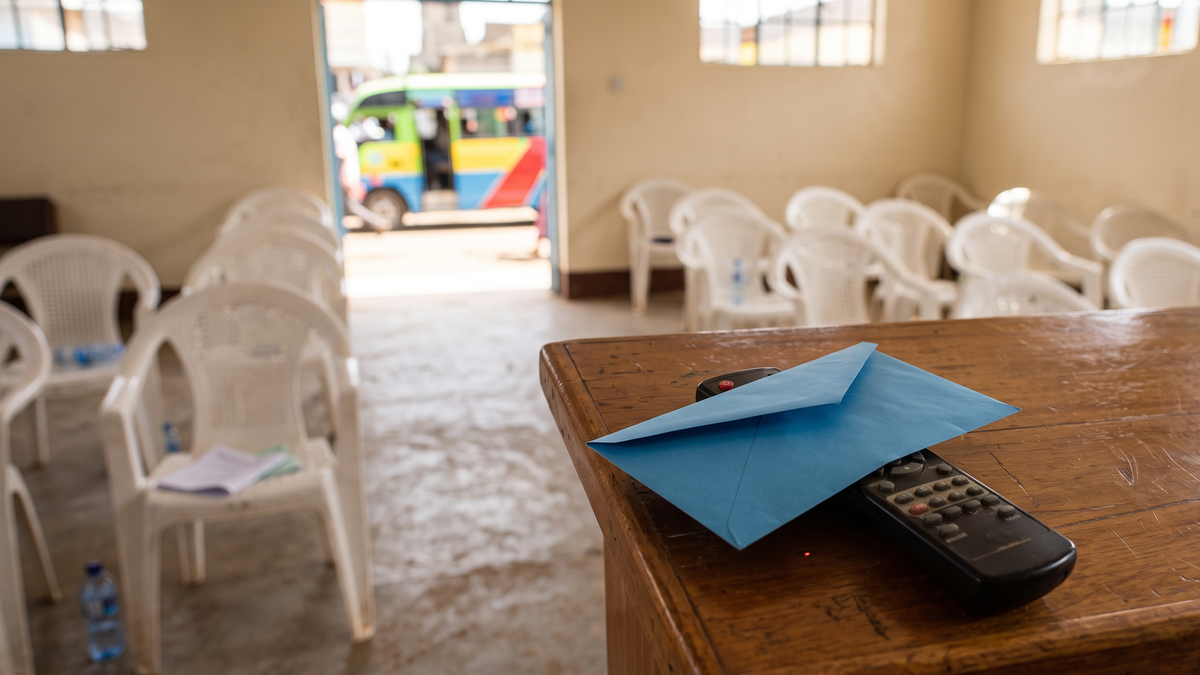
She took one blue offering envelope, folded it once, and placed it over the remote. The red light disappeared under paper meant for giving. Outside, matatus called from the road and someone downstairs lifted a metal shutter with a long rattling complaint. Inside, the screen stayed dark, and for once the church allowed a secret to remain covered.
ウィッグの候補を比べる場合は、毛質、耐熱性、長さ、セットのしやすさを同じ基準で確認しましょう。商品仕様や選び方を比べたい場合は、SPY×FAMILY コスプレウィッグから関連情報を確認できます。セットするときは耐熱温度を守り、目立たない部分から少量ずつ試しましょう。
Jaba Man
Jaba Man · Kenyan writer. Fiction and true stories from everyday Nairobi.